
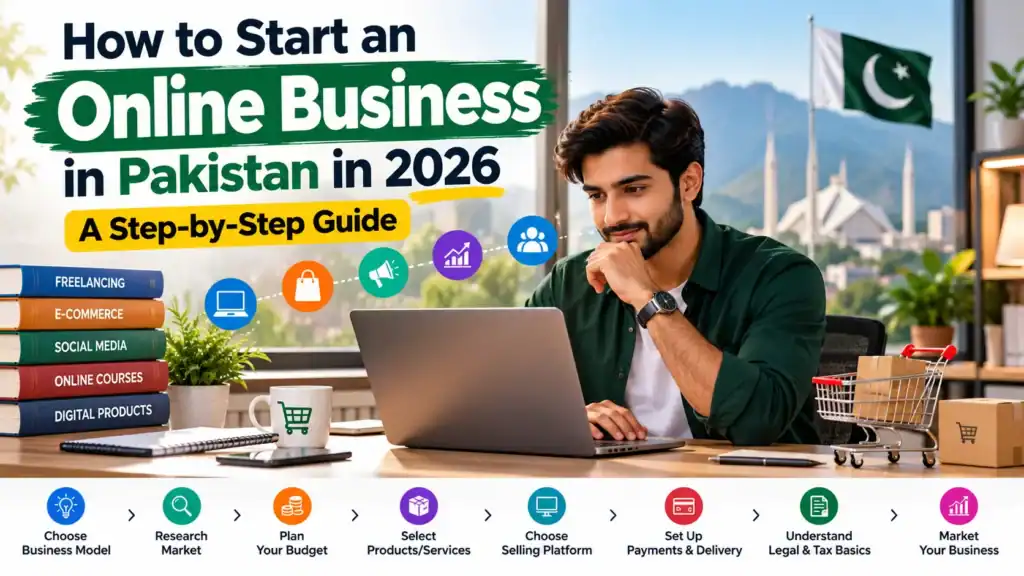
Starting an online business in Pakistan with a low investment can be an exciting opportunity for aspiring entrepreneurs. With the growing digital economy, wider smartphone use, and more ways to reach customers online, beginners can explore different business models without renting a physical shop.
Picking the right business idea is only half the battle. You should also define your target market, estimate costs, choose a sales platform, arrange payments and delivery, and create a workable marketing strategy.
This guide will teach you how to start an online business in Pakistan step by step, explore business models for different budgets, and avoid common pitfalls.
1. How to Start an Online Business in Pakistan: Choose the Right Model
Before investing money, decide what type of online business you want to start. Base your choice on your skills, budget, interests, available time, and customer demand.
If you are learning how to start an online business in Pakistan, begin with a model that matches your skills, available budget, and customer demand. Test your idea on a small scale before investing heavily.
Here are five business models worth considering.
Freelancing and Digital Services
If you have a marketable skill, freelancing can be a practical starting point. You can offer services such as content writing, graphic design, website development, video editing, virtual assistance, and digital marketing.
Platforms such as Upwork and Fiverr can help freelancers connect with clients, although competition and platform fees should be considered.
Best for: Beginners with useful skills who want to start with relatively low upfront costs.
E-Commerce and Online Product Selling
An e-commerce business involves selling physical products through your own website, an online marketplace, or social media.
Possible product categories include clothing, accessories, home products, stationery, and specialized items for a particular audience.
Before purchasing inventory, research customer demand, supplier reliability, delivery costs, and profit margins.
Best for: Entrepreneurs who enjoy product research, customer service, and managing orders.
Social Commerce and Reselling
Social commerce involves selling products through platforms such as Facebook, Instagram, and other social channels.
You can start by promoting products from a supplier or buying a small quantity to resell. This approach may help you test demand before investing in a larger inventory.
However, always confirm product quality, supplier terms, delivery arrangements, and return policies before accepting orders.
Best for: Beginners who understand social media and can communicate effectively with customers.
Online Education and Consulting
If you have expertise in a particular subject, you could offer online tutoring, professional consultations, workshops, or training sessions.
Examples include language tutoring, academic support, business consulting, and software training.
Build credibility by clearly explaining your qualifications, services, pricing, and the results customers can reasonably expect.
Best for: People with specialized knowledge or professional experience.
Digital Products
Digital products include e-books, downloadable templates, educational resources, design assets, and online courses.
They do not require physical shipping, but creating a useful product and reaching the right audience still takes time and effort.
Best for: Entrepreneurs who can create valuable digital resources for a specific audience.
2. Research Your Market and Target Customers
A promising business idea is not necessarily a profitable one. Before investing money, find out whether people actually want the product or service you plan to offer.
Start by answering these questions:
- Who is your ideal customer?
- What problem are you solving?
- How do customers currently solve that problem?
- What alternatives are available in the market?
- Why would someone choose your product or service?
Use Google Search, online marketplaces, social media discussions, and customer reviews to understand what people want.
You can also speak directly with potential customers. Ask about their needs, preferences, concerns, and willingness to pay.
For example, if you want to sell home organization products, research which items customers need, what competing sellers charge, and whether delivery costs leave enough room for a reasonable profit.
Practical tip: Test your idea with a small group of potential customers before committing to a large inventory or expensive website.
3. Estimate Your Startup Costs and Budget
You do not always need a large investment to start an online business. Your initial costs will depend on the business model you choose.
A service-based business may require little more than a computer, an internet connection, relevant software, and time to find clients. An e-commerce business may require money for inventory, packaging, delivery, and returns.
Prepare a simple budget that includes:
- Product development or initial inventory
- Website, domain, and hosting expenses, if required
- Packaging and shipping
- Payment processing charges
- Marketing and advertising
- Software and other operating expenses
- A reserve for unexpected costs
Separate one-time expenses from recurring monthly costs. This will help you understand how much money you need to launch and maintain the business.
Next, calculate your expected profit.
Basic formula:
Profit = Revenue − Total Costs
For product selling, remember to account for the product’s purchase price, packaging, shipping subsidies, payment fees, returns, and other relevant expenses.
Do not assume every sale is profitable. Calculate your margins before setting prices.
4. Choose Products or Services to Sell
Once you understand your market and budget, decide exactly what you will offer.
If you are selling products, look for items with clear customer demand, reliable suppliers, manageable shipping requirements, and sufficient profit margins.
Consider these factors:
- Product quality and durability
- Supplier reliability
- Competition and pricing
- Packaging and delivery requirements
- Return and replacement risks
- Potential for repeat purchases
If you are selling services, define your offer clearly. Explain what the customer receives, how the service works, how long it takes, and what it costs.
Avoid offering too many unrelated products or services at the beginning. A focused offer makes it easier to communicate your value and understand your customers.
5. Choose Where to Sell Online
You don’t need to build a complicated website before your first sale. Choose a platform that fits your business model and target customers.
Your Own Website
A website gives you greater control over your branding, product pages, content, and customer experience.
WordPress with WooCommerce is one option for building an online store. Other e-commerce platforms may also suit your needs, depending on your budget and technical requirements.
However, running your own website requires ongoing maintenance, security, customer support, and marketing.
Online Marketplaces
Marketplaces can provide access to existing shoppers. Before joining one, review its seller requirements, commissions, payment arrangements, return policies, and product restrictions.
Choose a marketplace that supports your product category and business model.
Social Media Platforms
Businesses can use Facebook and Instagram to showcase products, answer questions, and build relationships with potential buyers.
Social selling can be a practical way to test demand before investing in a full e-commerce website.
However, relying entirely on one social platform can be risky because account access, platform rules, and reach can change. Keep your business information and customer records organized.
Recommendation: Start with one main selling channel, then expand as you understand your customers and operations.
6. Set Up Payments and Delivery in Pakistan
A smooth payment and delivery process helps build customer confidence.
Payment Methods
Depending on your business model and provider eligibility, you may be able to accept payments through bank transfers, supported digital wallets, payment gateways, or cash on delivery.
Before choosing a payment method, confirm:
- Whether the provider supports your business type
- Transaction and withdrawal fees
- Settlement times
- Verification requirements
- Refund and dispute procedures
For online stores, explain the available payment options clearly at checkout.
Shipping and Order Fulfillment
If you sell physical products, research courier services that operate in your target delivery areas.
Compare delivery charges, estimated delivery times, tracking options, cash-on-delivery services, return handling, and settlement procedures.
Use suitable packaging and provide accurate contact information. Share tracking details with customers when available.
For cash-on-delivery orders, consider confirming the customer’s address and order details before dispatch. This may help reduce failed deliveries and unnecessary return costs.
For digital services and products, establish a clear process for delivering files, providing access, and handling customer support.
7. Understand Business Registration and Tax Basics
The legal and tax requirements for an online business depend on its structure, activities, size, and applicable rules.
Before launching, understand which requirements apply to your situation.
Choose a Business Structure
Depending on your circumstances, you may operate as an individual or consider a registered business structure.
If you plan to establish a company, consult the Securities and Exchange Commission of Pakistan (SECP) for information about the applicable registration process and requirements.
Do not assume every small online business must follow the same registration process.
Check Tax Requirements
Review the relevant guidance from the Federal Board of Revenue (FBR) to understand your tax obligations, registration requirements, and applicable filing rules.
Depending on your business activities, other tax or regulatory requirements may also apply.
Keep organized records of sales, expenses, invoices, and payments from the beginning.
Because regulations and thresholds can change, verify current requirements through official sources or consult a qualified tax professional before making compliance decisions.
Useful official resources:
- SECP: https://www.secp.gov.pk/
- FBR: https://www.fbr.gov.pk/
8. Create a Marketing Strategy
Once your business is ready, you need a practical way to attract customers.
You do not have to use every marketing channel at once. Start with the channels most relevant to your audience.
Search Engine Optimization (SEO)
If you have a website, publish helpful content that answers the questions your target customers search for.
For example, an online store selling home products could publish buying guides, product comparisons, and practical tutorials.
Use descriptive page titles, clear headings, relevant internal links, and useful product information. SEO takes time, so don’t expect results right away.
Social Media Marketing
Create useful, relevant content that demonstrates your products or explains your services.
Share product demonstrations, tutorials, customer questions, behind-the-scenes content, and business updates.
Focus on the platforms your potential customers actually use instead of trying to maintain every social account.
Content Marketing
Blog articles, guides, videos, and other educational resources can help establish your expertise and answer customer questions.
Useful content should provide genuine value instead of repeating promotional messages.
Paid Advertising
Paid advertising may help you reach a targeted audience, but it also carries financial risk.
Start with a clear objective and a budget you can afford to lose. Track relevant results, such as qualified leads, completed purchases, and customer acquisition costs.
Don’t increase spending just because an ad gets views or clicks. Focus on whether the campaign contributes to your business goals.
9. Build Trust and Provide Good Customer Service
Trust is especially important when customers buy from an unfamiliar online business.
You can build trust by:
- Providing accurate product descriptions and prices
- Using clear, genuine product images
- Displaying contact information
- Explaining delivery, returns, and refund policies
- Responding to customer questions professionally
- Protecting customer information
- Avoiding misleading claims and fake reviews
After a purchase, communicate clearly about order confirmation, delivery updates, and any unexpected delays.
Satisfied customers may return or recommend your business to others. Consistent service can therefore become an important part of your long-term growth strategy.
10. Measure Results and Improve Your Business
Launching your business is the beginning, not the end.
Review your results regularly to understand what is working and what needs improvement.
Useful metrics include:
- Website visitors and traffic sources
- Product views and inquiries
- Conversion rate
- Number of completed orders
- Average order value
- Profit margin
- Customer acquisition cost
- Repeat purchases and returns
If people visit your website but do not purchase, investigate possible reasons. Your pricing, product information, delivery charges, payment options, or checkout process may need improvement.
If a product consistently performs poorly, review demand and costs before investing more.
Make changes based on evidence rather than assumptions.
Common Mistakes to Avoid
Beginners can reduce unnecessary losses by avoiding these common mistakes:
Investing too much too early: Test demand before buying large quantities of inventory or committing to expensive services.
Ignoring market research: A product you like may not have enough paying customers.
Underestimating costs: Include delivery, packaging, platform charges, refunds, and marketing in your calculations.
Trying every platform at once: Start with a manageable strategy, then expand when you have evidence it works.
Expecting instant results: Building trust, attracting customers, and improving search visibility take time.
Neglecting customer service: Poor communication and unclear policies can damage customer confidence.
Ignoring legal and tax responsibilities: Understand the rules that apply to your business and verify them through official sources.
Frequently Asked Questions
1. How can I start an online business in Pakistan?
Start by choosing a business model, researching your target market, estimating costs, and selecting a suitable selling platform. Then set up payments and delivery where needed, check applicable legal requirements, and develop a marketing plan.
2. Which online business is best for beginners in Pakistan?
The best option depends on your skills, budget, interests, and customer demand. Freelancing and digital services may suit people with marketable skills, while reselling, e-commerce, tutoring, and digital products may suit other entrepreneurs.
Research your options before investing.
3. Can I start an online business with a small budget?
Yes, some business models can be started with relatively low upfront costs. Service-based businesses may require fewer initial expenses than businesses that need inventory, packaging, or specialized equipment.
However, even a low-cost business still requires time, effort, and a plan to find customers.
4. Do I need a website to sell online in Pakistan?
Not necessarily. You can start on a suitable marketplace or social media platform. A website can give you more control over your brand and customer experience as your business grows.
5. How can I receive online payments in Pakistan?
Available options depend on your business type and your provider’s eligibility requirements. You can explore supported bank transfers, digital wallets, payment gateways, and, where applicable, cash-on-delivery arrangements. Always verify fees, requirements, and settlement procedures with the provider.
6. How long does it take to make a profit from an online business?
There is no guaranteed timeline. Results depend on customer demand, pricing, competition, operating costs, marketing, and execution. Test your idea, monitor your finances, and base decisions on real results.
Final Thoughts
Starting an online business in Pakistan is easier when you break the process into clear steps. Choose a suitable business model, research your customers, estimate your costs, and begin with a focused offer.
Next, choose an appropriate sales channel, set up payments and delivery, understand your legal responsibilities, and build a consistent marketing strategy.
You do not need to do everything at once. Start small, learn from customer feedback, measure your results, and improve your approach as your business develops.
The most important step is to turn your idea into a well-researched plan and then test it carefully in the real market.